
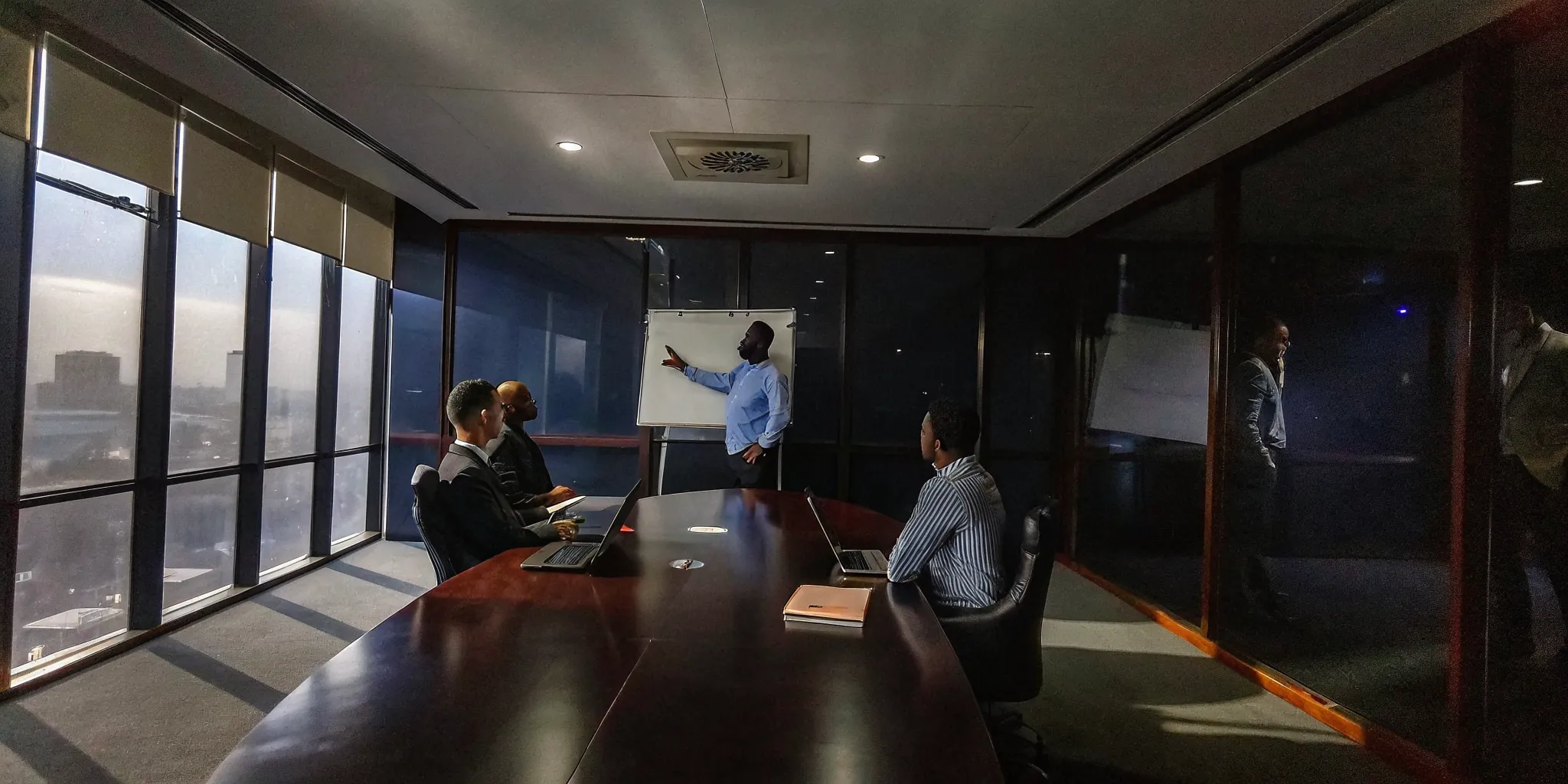
How to Run an Execution Improvement Workshop That Actually Changes Anything
Here’s the thing about strategy. Most of it is pretty good. CEOs aren’t failing because they don’t know what winning looks like. They’re failing because the gap between knowing and doing is a canyon, and nobody built a bridge.
I’ve seen it in boardrooms from Park City to Singapore. A polished strategic plan. An enthusiastic nod from every head in the room. And then, three months later, the same problems are back on the agenda with slightly different fonts on the slide deck.
That gap, between the plan on the wall and the results on the ground, is what we call the execution gap. Research from Harvard Business Review has found that two-thirds to three-quarters of large organizations struggle to implement their strategies successfully. The problem isn’t the quality of the thinking. It’s the absence of a system for turning that thinking into disciplined, daily action.
An execution improvement workshop, done right, installs that system. It’s not a motivational event. It’s not a brainstorming session with sticky notes and an espresso machine. It’s a structured, mission-driven intervention that gives your team a shared language, a repeatable operating rhythm, and clear accountability before anyone leaves the room.
I know this because I’ve spent the better part of 20 years closing execution gaps. First in the Royal Australian Air Force flying the F/A-18 Hornet, then in businesses ranging from hospitality to logistics to healthcare. The tools are the same. The stakes are different. The methodology works either way.
What Is an Execution Improvement Workshop?
An execution improvement workshop is a facilitated session where a team examines the gap between intended outcomes and actual results, identifies the root causes of that gap, and builds a concrete plan, with owners, deadlines, and a follow-up cadence, to close it.
It is not a training seminar. It is not a strategy offsite. It’s closer to what fighter pilots call a debrief: a structured, rankless, blame-free analysis of what happened, why, and what we’re going to do about it.
The output is not a binder. The output is a shared system. A repeatable way of planning, executing, and learning that the team can run themselves, mission after mission, long after the facilitator has left the room.
If your organization has ever spent a day in a workshop and returned to business as usual by Thursday, the problem wasn’t your people. The problem was the absence of that system.
Why Strategies Fail Before They Even Start
I was 23 years old on an airbase in Western Australia when I learned the most important lesson of my career. It had nothing to do with flying.
My instructor, Muff, and I were sitting on the runway in our training jet. The mission was a low-level strike profile over the outback. The weather had come in harder than forecast, gusting, dark, and angry, but the numbers were within our safe operating minimums. There was no official reason to abort.
There was, however, a very large gap between what the numbers said and what the sky looked like.
I clicked the mic. “The weather looks pretty bad outside the window.”
Silence.
That silence was the space between knowing and doing. I had the information. I had the plan. I had no system for processing the gap between them in real time and making a clear decision.
In business, that silence is a weekly occurrence. A project goes yellow, nobody flags it. A strategy assumption proves wrong, the plan doesn’t adapt. A team is executing brilliantly toward the wrong destination. The numbers say you’re fine. The window tells a different story.
The execution gap isn’t a lack of effort. It’s a lack of system.
The FLEX Framework: The Operating System for Execution
At Afterburner, the execution system we use and teach is called FLEX, which stands for FLawless EXecution. It’s a methodology engineered from the fighter pilot community, derived from the same operational loop the U.S. Air Force has refined over more than 60 years. If it keeps aircrew alive at 1,200 miles per hour, it works in a boardroom.
FLEX runs on four phases. Fighter pilots call them PBED: Plan, Brief, Execute, Debrief.
Every mission, whether it’s a combat sortie, a product launch, or a quarterly initiative, runs through this loop. Every time. No exceptions.
Here’s why that matters for an execution improvement workshop: the workshop itself should be run through FLEX. Not just taught as a framework. Used as the operating structure for the day. Your team shouldn’t just hear about PBED. They should experience it.
Plan: See Your Future in High Definition
Every FLEX cycle begins with a clear destination. In our world, we call that an HDD, a High-Definition Destination. Not a goal. A destination.
The difference matters more than most leaders realize. A goal is “grow revenue.” A destination is “increase market share in the mining sector by 800,000 gallons of fuel-oil per month by November 30.” One of our clients built exactly that HDD. They arrived in seven months and exceeded it. The HDD worked not because it was ambitious, but because it was unambiguous. Everyone in the organization could answer a single question: did we arrive, yes or no?
Before you run an execution improvement workshop, you need a clear HDD for the session itself. What, specifically, does the team need to walk out with? Not a vague intention. A binary, verifiable outcome.
FLEX planning answers six questions:
- What is the mission objective, aligned to our HDD?
- What are the threats, internal and external?
- What resources can we apply to each threat?
- What have we learned from previous missions?
- Who does what by when?
- What are our contingencies if conditions change?
Notice what’s not in that list: gut feel, optimism, and improvisation. The plan that fails to answer these questions is a plan that will fail in execution.
Brief: It's Not What You Say, It's What's Understood
Once the plan is built, it has to live in the minds of everyone on the team. That’s the job of the brief.
In a fighter squadron, we don’t call it a meeting. We call it a brief. Brief by name, brief in nature. The mission leader walks through the plan step by step, and nobody leaves with unanswered questions.
In a workshop context, the brief is how you align the room before execution begins. You restate the mission objective in clear, unambiguous language. You walk through the threats and resources. You assign every action to a specific person. You answer every question before people start executing.
The test of a good brief is simple: can everyone on your team describe their role and the mission objective without checking their notes? If not, the brief wasn’t clear enough. That’s a diagnostic, not a criticism. Go back and brief again.
Execute: Fly the Brief
Execution is where leadership stops being theoretical.
Here’s the thing people miss: execution is only one of four phases in FLEX. In most organizations, it’s treated like the only one. Plan is an afterthought. Brief is a formality. Debrief is optional. Then everyone wonders why execution is chaotic.
Disciplined execution means flying the brief. When conditions diverge from the plan, and they will, the team knows how to identify the gap, communicate it cleanly, and make a real-time adjustment based on pre-briefed contingencies. That’s not improvising. That’s executing against a plan that was built to handle uncertainty.
During execution, we use what we call the X-Gap, an Execution Gap review. The X-Gap applies the ORCA framework at regular intervals throughout a mission to ask one question: is what’s happening aligned with what we intended?
Run as a weekly 15-minute pulse check, the X-Gap catches problems before they compound. Run monthly, it surfaces systemic patterns. Run quarterly, it tells you whether you’re still flying toward the right HDD.
Everything you currently call a leadership meeting is an X-Gap waiting to be structured properly.
Debrief: The Mission Isn't Over Until It's Debriefed
This is where most organizations leave performance on the table.
In fighter aviation, a mission is not over until the debrief is over. Full stop. We don’t step out of the jet and say “great mission,” because we don’t know that yet. We walk straight to the debrief room, examine what actually happened versus what we intended, and extract the lesson before it disappears.
The business equivalent: a project isn’t done when it’s delivered. A quarter isn’t finished when results are in. Each is finished when you’ve debriefed it.
The FLEX debrief runs on ORCA, which stands for Objective, Result, Cause, Action.
ORCA: The Debrief Framework That Closes the Execution Gap
ORCA (Objective, Result, Cause, Action) is the four-step debrief that every high-performing team needs to run after every significant mission.
Objective: What did we set out to do? Restate the mission objective. Was it achieved, yes or no? Review the course of action step by step. Build an honest picture before you start interpreting it.
Result: What actually happened? Link results directly to the objective with zero ambiguity. What was done, not done, or done incorrectly? What was the measurable impact? This step is factual. No opinions yet.
Cause: Why was there a gap? Keep asking why until you identify the specific decision, behavior, or system failure at the root of the execution gap. The cause is almost never bad luck. It’s almost always traceable to a step in the planning process, a communication breakdown, or a bias in the decision-making.
Action: What specifically will we do differently on the next mission? One action per root cause. Named. Owned. Time-bound. Not “we’ll try to communicate better.” An action is: “By Friday, Sarah will build a one-page brief template for all project kick-offs.”
The discipline of ORCA, run consistently and not just when things go wrong, is what turns individual performance into compound organizational growth. The math behind this is straightforward: one percent better per mission, compounded daily across a year, produces 37 times the improvement. The team that debriefs every mission outperforms the one that doesn’t, not because they’re more talented, but because they learn faster.
How to Design a Workshop That Produces Real Change
Here’s what I’ve learned about execution improvement workshops that don’t work: they start with the wrong objective.
“Let’s improve our culture of accountability” is not a workshop objective. It’s a wish. A workshop objective is: “By end of day, we will have identified the top three root causes of our missed Q2 delivery timeline, assigned an owner to each, and built a 30-day action plan with weekly X-Gap check-ins.”
That’s a mission. That’s plannable. That’s debriefable.
Beyond the objective, there are five design decisions that determine whether your workshop produces lasting change or just a nice day out of the office.
Get the Mission Objective Right Before You Book the Room
Before you send a single calendar invite, write down the single, tangible outcome you need to hold in your hand at the end of the day. Binary. Yes or no. Did we arrive?
This mission objective dictates everything else: who needs to be in the room, how long the session should run, and what you need people to prepare in advance. Skip this step and you’ve already designed a meeting, not a mission.
Put the Right People in the Room, Not the Most People
The success of a workshop depends entirely on assembling the right team, not the largest one.
You need two types of people: those with the authority to make decisions, and those who live the process every day. Large groups are hard to manage and prone to passive observation. A cross-functional group of eight to twelve people who actually feel the pain of the execution gap, and are empowered to fix it, will consistently outperform a fifty-person all-hands.
Curate the room like you’d crew a mission. Everyone there has a specific role and a specific reason for being there.
Build an Agenda That's a Flight Plan, Not a Topic List
An agenda is not a list of things to discuss. It’s a sequence of structured activities designed to move the team from problem identification to committed action.
The best execution workshop agendas alternate between three modes: analysis (what’s actually happening?), root cause investigation (why is it happening?), and commitment (who does what by when to change it?). Each mode has a time box. Each session ends with a documented output.
Start every workshop by stating the mission objective and writing it where everyone can see it. End every session by documenting what was decided, who owns it, and when.
Create Psychological Safety for the Nameless, Rankless Debrief
In a fighter squadron, the debrief is nameless and rankless. The most senior pilot in the room has the same obligation to examine their own decisions as the most junior. Rank doesn’t protect you from an honest debrief. It makes it your duty.
In a business workshop, this principle is critical. If people fear blame, they’ll surface safe answers. You’ll leave the room with a sanitized picture of what’s happening, which is precisely the picture you don’t need.
Establish from the start that the workshop is focused on improving the system, not judging the people. The debrief asks “what caused the result?” not “whose fault is it?” That shift, from judgment to curiosity, is what unlocks the honest dialogue that actually closes execution gaps.
End With Unambiguous Accountability
The single most important moment of any execution improvement workshop is the last 20 minutes.
Before anyone leaves, every action item must have three things: a clear description of what needs to happen, a single owner who is accountable for the outcome, and a firm deadline.
Not “we’ll follow up on this.” Not “the team will look into it.” One person. One action. One date.
This isn’t about micromanagement. It’s about the difference between a conversation and a commitment. Every item that leaves the room without an owner and a deadline is an idea that will not happen. I’ve seen it too many times to pretend otherwise.
The X-Gap: Your Weekly Execution Pulse Check
The workshop is not the finish line. It’s the starting block.
Once your team leaves the room with a clear action plan, the X-Gap is the mechanism that keeps momentum alive. It’s ORCA applied at scale, not across a single mission, but across the pattern of many.
In practical terms:
A weekly X-Gap runs 15 to 30 minutes. It scans for deviations from the plan. Not a status update on what’s green. The X-Gap is focused on red and yellow only: what’s diverging from intent, and what’s the cause?
A monthly X-Gap runs 60 to 90 minutes. It reviews patterns across missions. What root causes keep recurring? What systemic adjustments does the organization need to make?
A quarterly X-Gap is a half-day strategic review. Are we still pointed at the HDD? Does the HDD itself need to change?
The format for each is ORCA, applied to the time horizon in question. Same four steps. Wider lens.
Here’s a concrete example from one of our client engagements. A mid-size manufacturer was hitting quarterly revenue targets. Everyone in the leadership team was reasonably satisfied. A monthly X-Gap told a different story: revenue was up 22 percent, but customer acquisition costs had risen 40 percent, gross margin was down 8 percent, sales team burnout was at an all-time high, and customer satisfaction was declining. The cause was the compensation structure. It rewarded closed deals, not profitable ones. The team was hitting numbers by discounting heavily and cherry-picking easy wins. Without the X-Gap, they would have kept winning until the business imploded. The X-Gap gave them a year’s head start on fixing the system.
The X-Gap doesn’t just track execution. It protects the mission.
What Makes an Afterburner Execution Workshop Different
I’ll be honest with you about the workshop industry. Most of it is a letdown. You lose a day, sit through presentations about change management, generate a cloud of sticky notes, and return to your desk with a binder of ideas that nobody owns.
An Afterburner workshop is designed from the ground up to break that pattern. We don’t deliver lectures. We run missions.
Our approach is built around Flawless Leadership℠ and the FLEX operating system. We bring the same methodology that fighter pilots use to ensure mission success, not as a metaphor, but as a functional framework your team walks out using.
The difference shows up in the output. Teams leave with a shared language (FLEX, PBED, ORCA, HDD, X-Gap), a concrete action plan with owners and deadlines, and the first three X-Gap check-ins scheduled before they walk out the door. The workshop isn’t an event. It’s the first mission in a new operating rhythm.
We’ve run this methodology with companies in financial services, healthcare, logistics, manufacturing, hospitality, and technology. CEOs, frontline teams, and everyone in between. The frameworks adapt. The fundamentals don’t change.
If you want to explore what this looks like for your organization, start at our Strategic Planning Workshop page or browse the Afterburner blog for more on the frameworks.
Measure Whether the Workshop Actually Worked
An execution improvement workshop is only worth running if you can tell whether it worked. That means defining success metrics before the session, not after.
Three measurement layers matter.
Behavioral Change
Are teams running the ORCA debrief after significant missions? Are briefings replacing rambling update meetings? Are action items leaving rooms with single owners and firm deadlines? These behavioral indicators are leading signals that the methodology is taking root.
Implementation Rate
Track the action items that came out of the workshop. Within 30 days, what percentage are on track? A high implementation rate is evidence of real accountability. A low one tells you exactly where the system needs reinforcement.
Business Performance
Connect the workshop’s objectives to the KPIs that matter to your business. If the session focused on improving project delivery, measure on-time completion rates. If it targeted sales cycle length, track average time to close. The workshop should move a number. If it doesn’t, the mission objective wasn’t sharp enough.
Frequently Asked Questions
What is an execution improvement workshop? An execution improvement workshop is a facilitated session where a team examines the gap between intended outcomes and actual results, identifies root causes using a structured framework like ORCA (Objective, Result, Cause, Action), and builds a concrete action plan with clear owners and deadlines to close that gap. It’s less about generating ideas and more about installing a repeatable system for execution.
What is the FLEX framework and how does it apply to workshops? FLEX stands for FLawless EXecution. It’s an execution methodology derived from fighter pilot operations, running on four phases: Plan, Brief, Execute, Debrief (PBED). Applied to an execution improvement workshop, FLEX provides the structure for the entire session. You plan the workshop like a mission, brief the team clearly before execution begins, run the workshop with disciplined focus, and debrief afterward to capture what worked and what didn’t.
How is an execution improvement workshop different from a regular strategy offsite? A strategy offsite typically generates plans and ideas. An execution improvement workshop focuses on the gap between existing plans and actual results, diagnosing what’s breaking in execution and building a system to fix it. The key difference is accountability: every output from a well-run execution workshop is assigned to a specific owner with a firm deadline before anyone leaves the room.
How do you maintain momentum after an execution improvement workshop? The X-Gap is the mechanism for maintaining momentum. It’s ORCA applied at a recurring cadence: weekly (15 to 30 minutes), monthly (60 to 90 minutes), and quarterly (half day). The X-Gap asks: is what’s happening aligned with what we intended? If not, why, and what’s the one action we take to close the gap? Scheduled X-Gaps transform a one-day workshop into a sustainable execution rhythm.
Who should be in the room for an execution improvement workshop? The ideal group is cross-functional, with authority to make decisions and direct knowledge of the process being examined. Keep the group focused: eight to twelve people is typically the right size. You need the people who feel the friction of the execution gap and are empowered to remove it. Senior-only groups miss the on-the-ground reality. Too large a group and the session becomes passive observation rather than active problem-solving.
Christian “Boo” Boucousis is the CEO of Afterburner (), former Royal Australian Air Force F/A-18 Hornet pilot, and author of The Afterburner Advantage and Flawless Leadership℠. He is based in Park City, Utah.